Brand
Nintendo
20 devices in the catalog
Repairability grades
How repairable Nintendo’s products are, by category — from RepairYour.Tech’s Right-to-Repair report card.
Devices
-
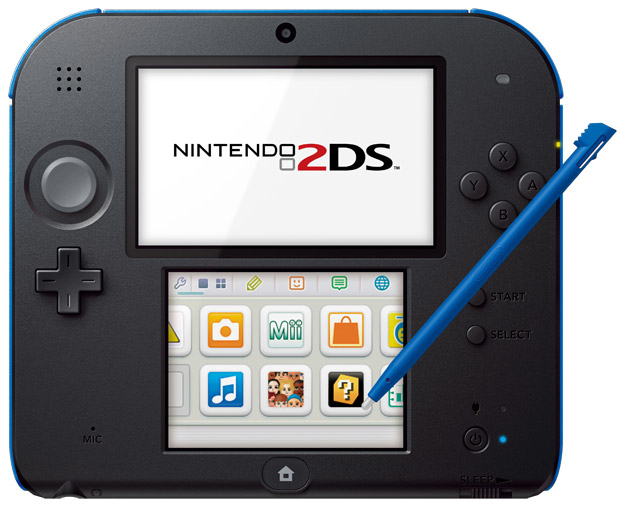 Nintendo 2DS Nintendo 2DS. Platform: Nintendo 2DS. Product colour: Black, Blue. Display diagonal: 8.97 cm (3.53"), Second display diagonal: 7.67 cm (3.02"). Compatible memory cards: SD. Headphone connectivity: 3.5 mm
 -
 Nintendo 3DS Nintendo 3DS. Platform: Nintendo 3DS. Product colour: Black. Display diagonal: 8.97 cm (3.53"), Display number of colours: 16.78 million colours. Compatible memory cards: SD. Battery technology: Lithium-Ion (Li-Ion)
 -
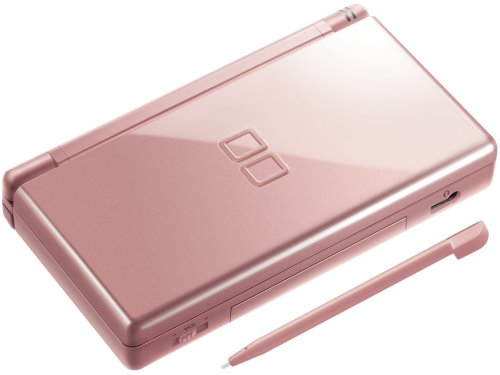 Nintendo DS Lite Nintendo DS Lite. Platform: Nintendo DS. Product colour: Pink, Gaming control technology: Digital. Display diagonal: 7.62 cm (3"), Display resolution: 256 x 192 pixels, Display number of colours: 262144 colours. Compatible memory cards: SD. Battery life (max): 19 h, Charging time: 4 h
 -
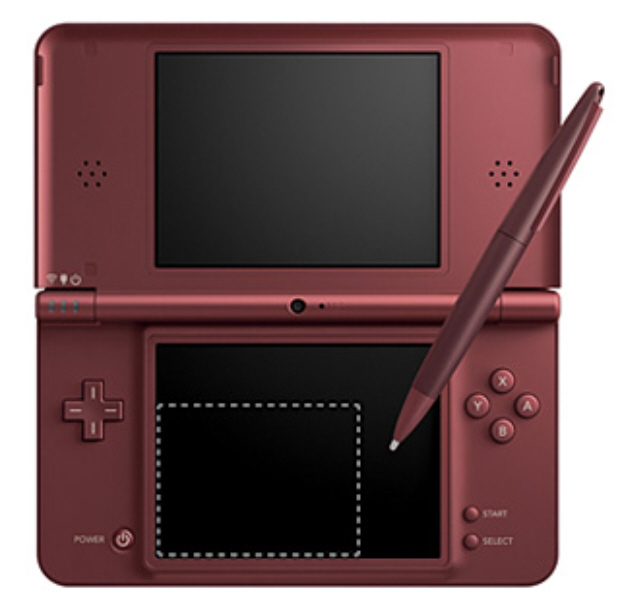 Nintendo DSi Nintendo DSi XL. Product colour: Red. Display diagonal: 10.7 cm (4.2"). Compatible memory cards: SD. Weight: 314 g
 -
 Game Boy Color The Game Boy Color is an 8-bit handheld game console developed by Nintendo. It was released in Japan on October 21, 1998, and in international markets the following month. Compared with the original Game Boy, the Game Boy Color features a color TFT screen instead of monochrome, a CPU running at up to twice the speed, and four times as much memory. It is backward compatible with games developed for its predecessor. The Game Boy Color was released during the fifth generation of video game consoles and competed with Bandai's Japan-only WonderSwan, SNK's Neo Geo Pocket Color, and Sega's North America-only Genesis Nomad.
 - Game Boy (DMG) Nintendo game boy dmg: Sharp SM83 (custom Intel 8080 / Zilog Z80 hybrid, 8-bit) @ 4.194304 MHz, within the DMG-CPU/LR35902 SoC (includes the PPU). Released in 1989.
-
 Nintendo GameCube The Nintendo GameCube is a home video game console developed and marketed by Nintendo. It was released in Japan on September 14, 2001, in North America on November 18, 2001, and in Europe on May 3, 2002. It is Nintendo's fourth major home console, succeeding the Nintendo 64, and competed with Sony's PlayStation 2, Sega's Dreamcast, and Microsoft's Xbox in the sixth generation of game consoles.
 -
 Game Boy Advance The Game Boy Advance (GBA) is a 32-bit handheld game console, manufactured by Nintendo, which was released in Japan on March 21, 2001, and to international markets that June. It was later released in mainland China in 2004, under the name iQue Game Boy Advance. Compared to the Game Boy Color it succeeded, the console offered a significantly more powerful ARM7 processor and improved graphics, while retaining backward compatibility with games initially developed for its predecessor.
 -
 Game Boy Advance SP The Game Boy Advance SP is a 32-bit handheld game console made by Nintendo. It was released in Japan on February 14, 2003, and in international markets in March. The SP is an upgraded version of the Game Boy Advance with a more compact clamshell design.
 -
 Nintendo 64 The Nintendo 64 (N64) is a home video game console developed and marketed by Nintendo. It was released in Japan on June 23, 1996, in North America on September 29, 1996, and in Europe and Australia on March 1, 1997. It was Nintendo's third major home console, following the Super Nintendo Entertainment System, and competed with Sony's PlayStation and the Sega Saturn in the fifth generation of consoles.
 -
 Nintendo Entertainment System The Nintendo Entertainment System (NES) is a home video game console developed and marketed by Nintendo. It was released as the Family Computer (Famicom) in Japan on July 15, 1983, and as the NES in test markets in the United States on October 18, 1985, followed by a nationwide launch on September 27, 1986. The NES was distributed in Europe, Australia, and parts of Asia throughout the 1980s. It was Nintendo's first programmable home console, succeeding the Color TV-Game line of dedicated consoles, and primarily competed with Sega's Master System in the third generation of video game consoles.
 -
 New Nintendo 3DS XL Nintendo new 3ds xl: 4.88 inch autostereoscopic (3D) LCD, 400x240 per eye (95.6 ppi) display, Quad-core ARM11 MPCore @ 804 MHz, 1 GB flash storage. Released in 2014.
 -
 Super Nintendo Entertainment System The Super Nintendo Entertainment System is a home video game console developed and marketed by Nintendo. It was released as the Super Famicom in Japan on November 21, 1990, as the Super NES in North America on August 23, 1991, and internationally throughout 1992. It was Nintendo's second programmable home console, following the Nintendo Entertainment System (NES). A fourth-generation console, the SNES primarily competed with the Sega Genesis in the console war, a fierce battle for market share in the United States and Europe.
 -
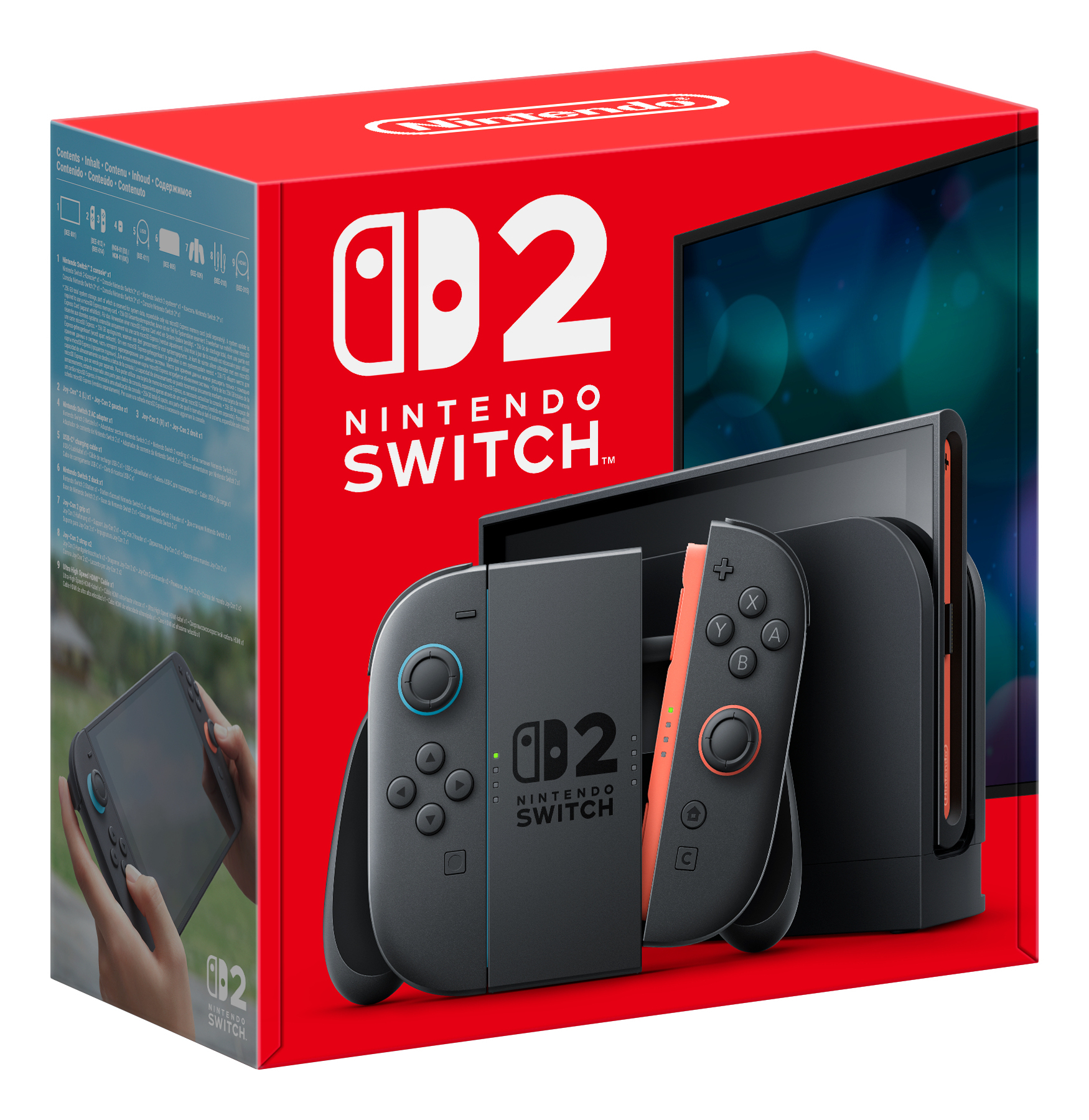 Nintendo Switch 2 Nintendo Switch 2. Platform: Nintendo Switch 2. Product colour: Black, Gaming control technology: Analogue / Digital, Gaming control function buttons: D-pad, Home button, Menu button, Power button. Display: LCD, Display diagonal: 20.1 cm (7.9"), Display resolution: 1920 x 1080 pixels. Storage media type: Flash, Built-in memory capacity: 256 GB, Compatible memory cards: MicroSD (TransFlash), MicroSDXC. Frequency band: 2.4 GHz, Wi-Fi standards: Wi-Fi 6 (802.11ax)
 -
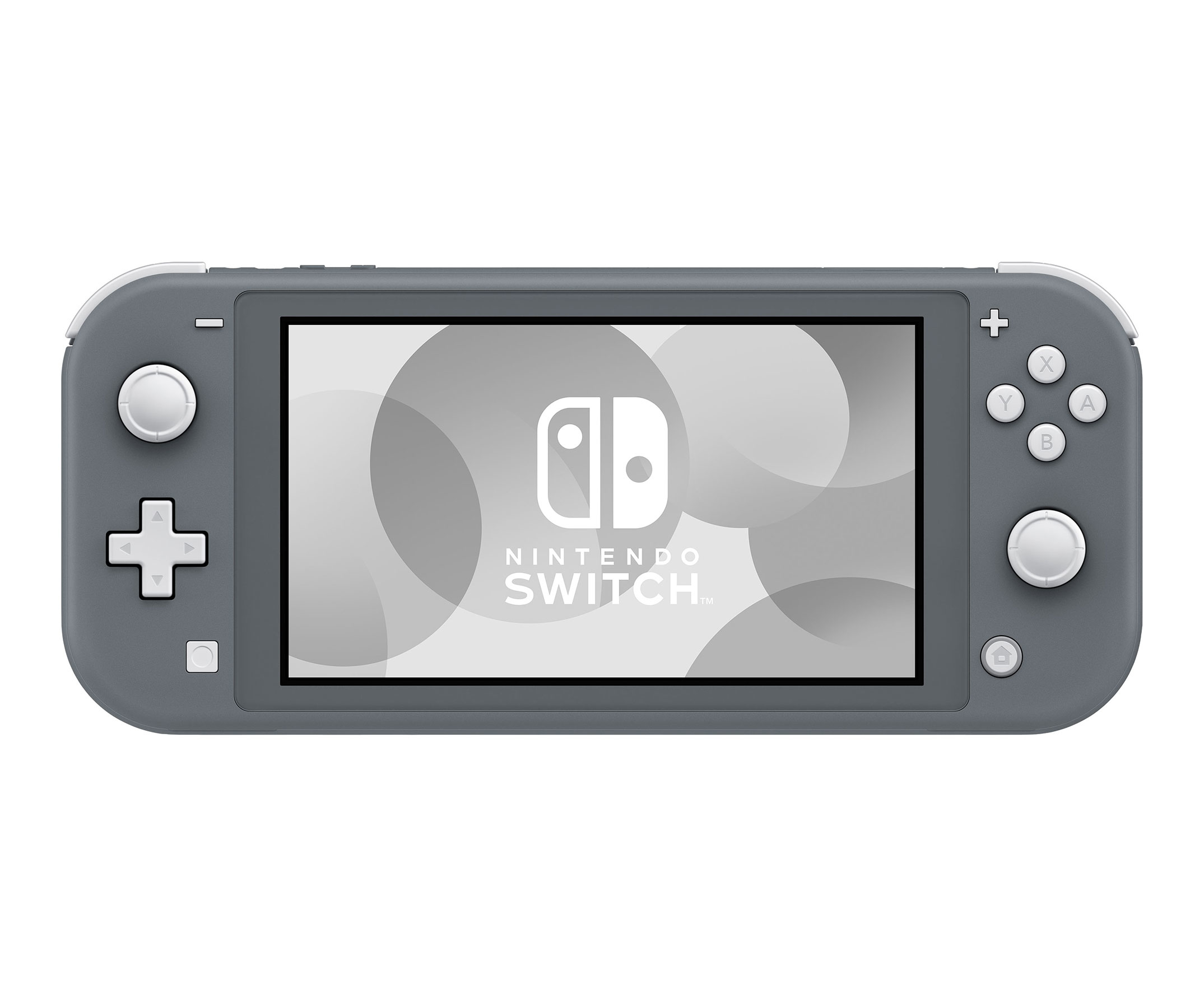 Nintendo Switch Lite Nintendo Switch Lite. Platform: Nintendo Switch, Processor frequency: 768 MHz. Product colour: Grey, Gaming control technology: Analogue / Digital, Gaming control function buttons: D-pad. Display: LCD, Display diagonal: 14 cm (5.5"), Display resolution: 1280 x 720 pixels. Built-in memory capacity: 32 GB, Compatible memory cards: MicroSD (TransFlash), MicroSDHC, MicroSDXC, Maximum memory card size: 2 TB. Wi-Fi standards: 802.11a, 802.11b, 802.11g, Wi-Fi 4 (802.11n), Wi-Fi 5 (802.11ac)
 -
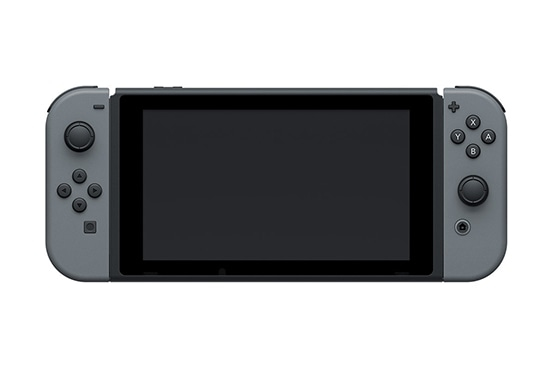 Nintendo Switch (OLED model) Nintendo Switch. Platform: Nintendo Switch, Processor frequency: 768 MHz, Internal memory: 4000 MB. Product colour: Grey, Gaming control technology: Analogue / Digital, Gaming control function buttons: D-pad. Display: LCD, Display diagonal: 15.8 cm (6.2"), Display resolution: 1280 x 720 pixels. Built-in memory capacity: 32 GB, Compatible memory cards: MicroSD (TransFlash), MicroSDHC, MicroSDXC, Maximum memory card size: 2 TB. Frequency band: 2.4/5 GHz, Wi-Fi standards: 802.11a, Wi-Fi 5 (802.11ac), 802.11b, 802.11g, Wi-Fi 4 (802.11n)
 - Nintendo Switch (v1) Nintendo Switch. Platform: Nintendo Switch, Processor frequency: 768 MHz, Internal memory: 4000 MB. Product colour: Grey, Gaming control technology: Analogue / Digital, Gaming control function buttons: D-pad. Display: LCD, Display diagonal: 15.8 cm (6.2"), Display resolution: 1280 x 720 pixels. Built-in memory capacity: 32 GB, Compatible memory cards: MicroSD (TransFlash), MicroSDHC, MicroSDXC, Maximum memory card size: 2 TB. Frequency band: 2.4/5 GHz, Wi-Fi standards: 802.11a, Wi-Fi 5 (802.11ac), 802.11b, 802.11g, Wi-Fi 4 (802.11n)
-
 Nintendo Virtual Boy The Virtual Boy is a video game console developed and manufactured by Nintendo and released in Japan on July 21, 1995, and in North America on August 14, 1995. Promoted as the first system capable of rendering stereoscopic 3D graphics, it featured a red monochrome display viewed through a binocular eyepiece, with games employing a parallax effect to simulate depth. The console struggled commercially, and its limited market performance led Nintendo to discontinue production and game development in 1996, following the release of only 22 games.
 -
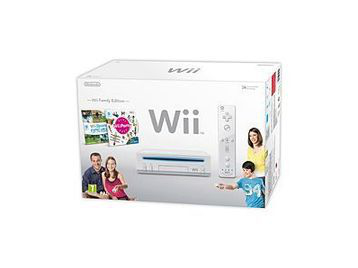 Nintendo Wii Nintendo Wii Family Edition. Platform: Wii. Product colour: White
 -
 Nintendo Wii U The Wii U is a home video game console developed by Nintendo as the successor to the Wii. Released in late 2012, it was the first eighth-generation video game console and competed with Microsoft's Xbox One and Sony's PlayStation 4.